
The Ripple Effect of AI Research
Balancing Exploration and Exploitation for Innovation

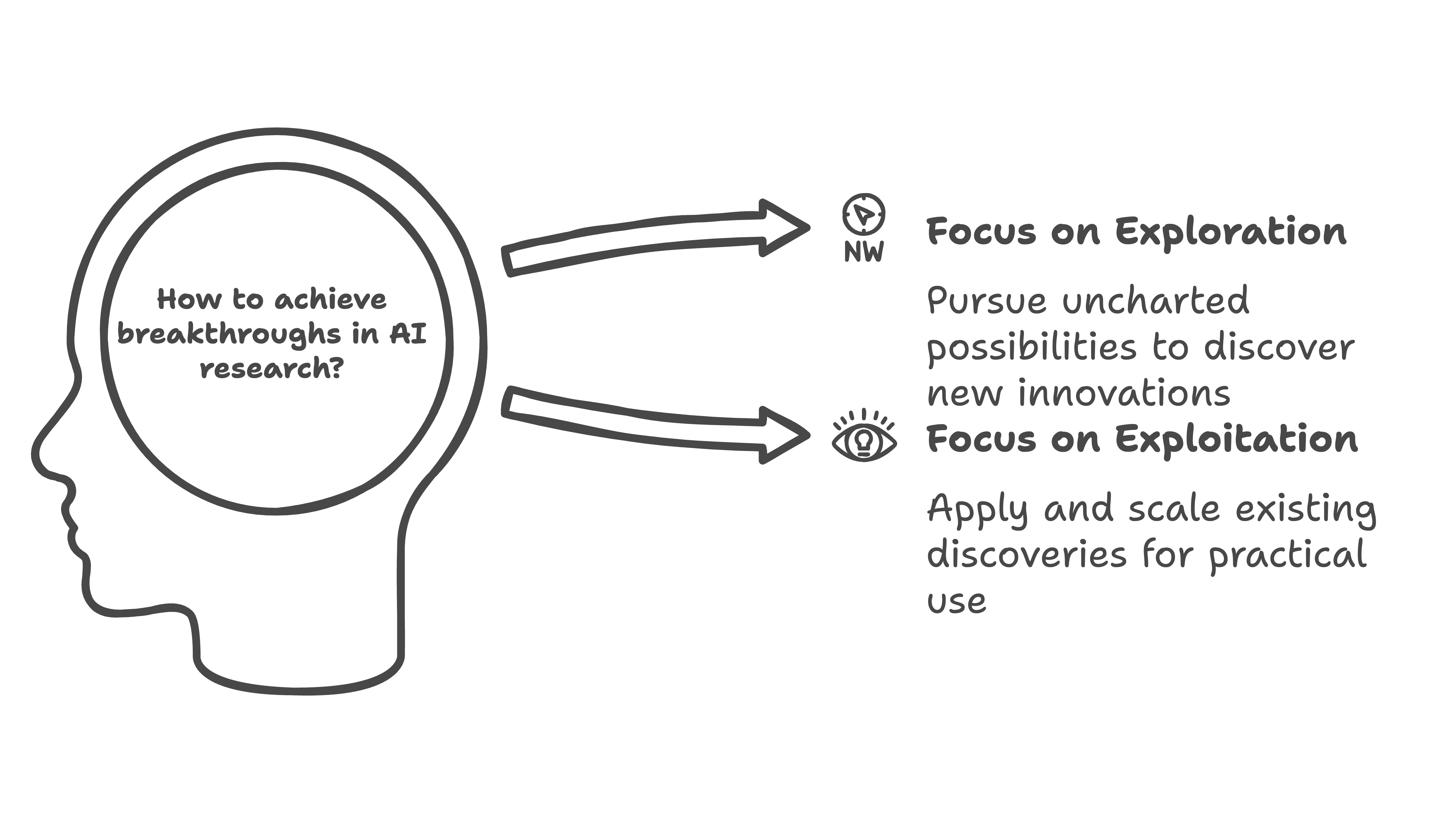
In AI research, identifying the next breakthrough is everything. Progress happens in two ways: by creating groundbreaking innovations or learning from external discoveries and building on them. Research revolves around exploration—the pursuit of uncharted possibilities—with the ultimate goal of reaching exploitation, where discoveries can be applied and scaled (see explore vs exploit).
Exploration: The Foundation of Innovation
From my experience, exploration is where the magic begins. It’s about testing unproven ideas, accepting uncertainty, and pursuing curiosity. The goal is to uncover something transformative—a new architecture, method, or concept that redefines the field. For example, the transformer architecture revolutionized natural language processing, giving rise to GPT and BERT. The paper, "Attention is All You Need," introduced an architecture that replaced recurrent networks with attention mechanisms, enabling faster training and scalability, which rapidly advanced the field.
Exploitation: Turning Ideas into Impact
The journey from exploration to exploitation is not linear, and knowing when to pivot is essential. Once a discovery is made, the focus shifts to exploitation—scaling and applying it to solve real problems. For instance, diffusion models started as a novel idea for image generation but evolved into tools like DALL-E and Stable Diffusion, now staples in creative industries. Exploitation ensures discoveries transition from research to impactful tools.
Once a discovery is made, the focus shifts to exploitation—scaling and applying it to solve real problems. For instance, diffusion models started as a novel idea for image generation but evolved into tools like DALL-E and Stable Diffusion, now staples in creative industries. Exploitation ensures discoveries transition from research to impactful tools.
Balancing Exploration and Exploitation
One thing I’ve learned is knowing when to stop exploiting is just as important as starting. Diminishing returns often signal it’s time to pivot—whether from exploration to exploitation or vice versa. For me, it’s about staying curious while ensuring the current focus still aligns with evolving goals and user needs.
One thing I’ve learned is knowing when to stop exploiting is just as important as starting. Diminishing returns often signal it’s time to pivot, or when new breakthroughs elsewhere suggest your approach might soon be outpaced. For me, it’s about staying curious while ensuring the current focus still aligns with evolving goals and user needs.
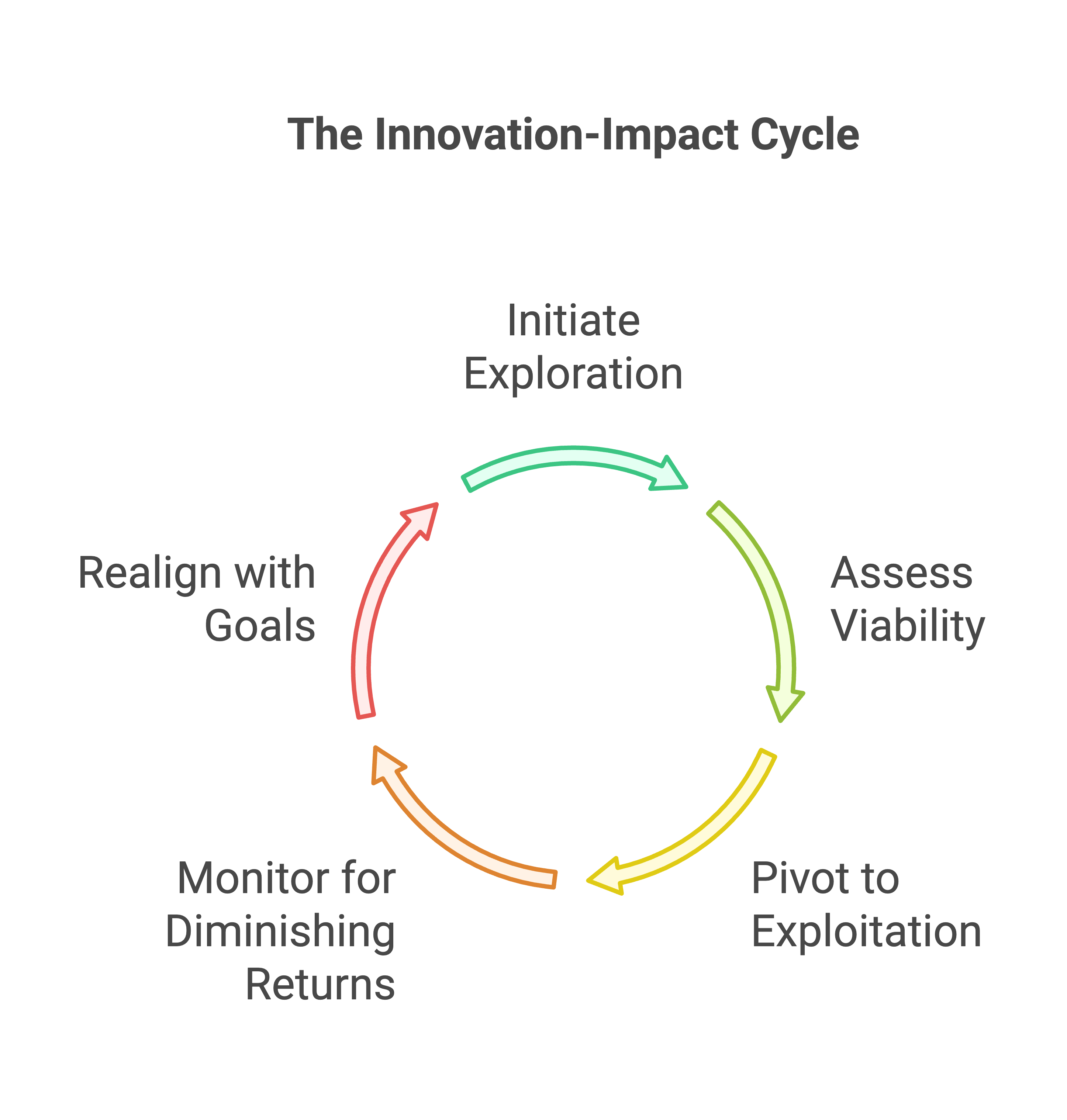
The challenge lies in striking the right balance. Overemphasizing exploration wastes resources on unviable ideas, while overfocusing on exploitation risks stagnation. Teams must know when to pivot, leveraging exploration for breakthroughs and exploitation for scaling value.
My Approach as a Product Manager
As a Product Manager working with AI researchers, my approach focuses on bridging the gap between open-ended exploration and product goals. Here are key strategies:
Support Exploration: Provide clear problem statements and space for experimentation.
Align on Goals: Define shared objectives that tie research to the product roadmap.
Facilitate Collaboration: Connect researchers and engineers early to streamline deployment.
Encourage Updates: Promote knowledge-sharing sessions to align the team.
Balance Innovation and Delivery: Help weigh risks of ambitious exploration against incremental progress.
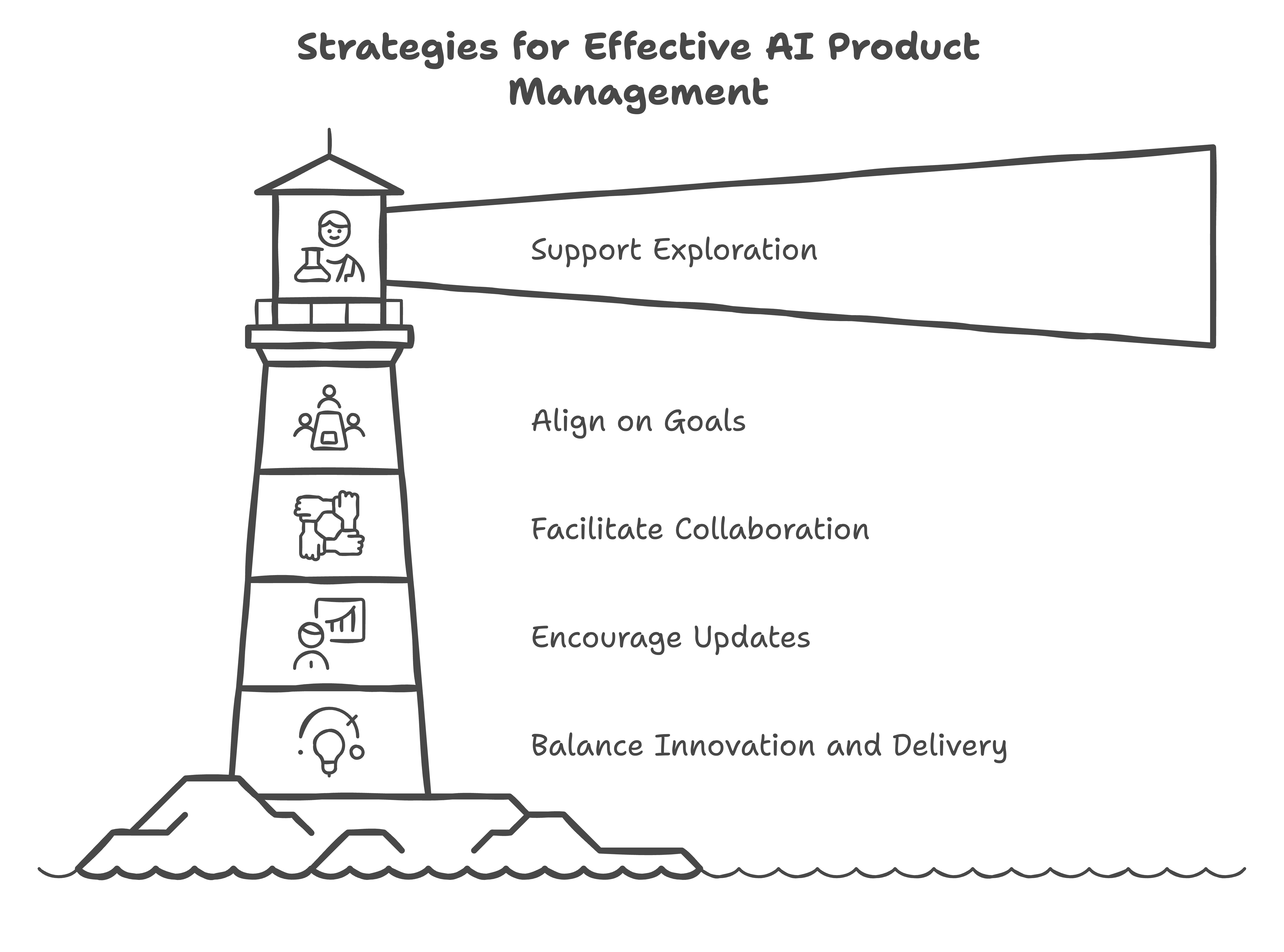
By fostering respect and clear communication, PMs can help researchers transform breakthroughs into impactful products.
Final Thoughts
AI research thrives on breakthroughs, whether from internal discovery or external learning. Exploration drives innovation, but its ultimate purpose is exploitation—turning ideas into tangible impact. Balancing these phases is delicate but vital to keeping AI research dynamic, fast-paced, and transformative. How do you approach balancing exploration and exploitation in your own work?